Bureau data where the decision happens, not in another tab.
SCREDIT integrates commercial credit bureau data directly into onboarding, credit review, and monitoring, so external risk signals arrive inside the workflow instead of being copied from vendor websites.
What is credit bureau integration?
Credit bureau integration connects a commercial credit bureau's data to the systems where credit decisions are actually made, rather than requiring an analyst to sign into a bureau portal and save a PDF. Reports, scores and trade data arrive in a consistent shape and can be refreshed on a schedule instead of only at onboarding.
Bureau data you have to go fetch is bureau data that gets skipped.
When pulling a business credit report means logging into a vendor portal, downloading a PDF, and pasting numbers into a spreadsheet, reports get pulled inconsistently, filed inconsistently, and consulted rarely after the initial decision. The data exists; the workflow wastes it.
What SCREDIT delivers
Direct Vendor API Integration
SCREDIT connects to commercial bureau vendor APIs, in the pattern of providers like CreditSafe, pulling reports and scores programmatically rather than by portal login.
Bureau Data in Onboarding
Pull bureau reports during application review, so external signals are attached to the application before the decision, not after.
Bureau Data in Periodic Review
Refresh bureau data as part of scheduled credit reviews, so re-approvals rest on current external information.
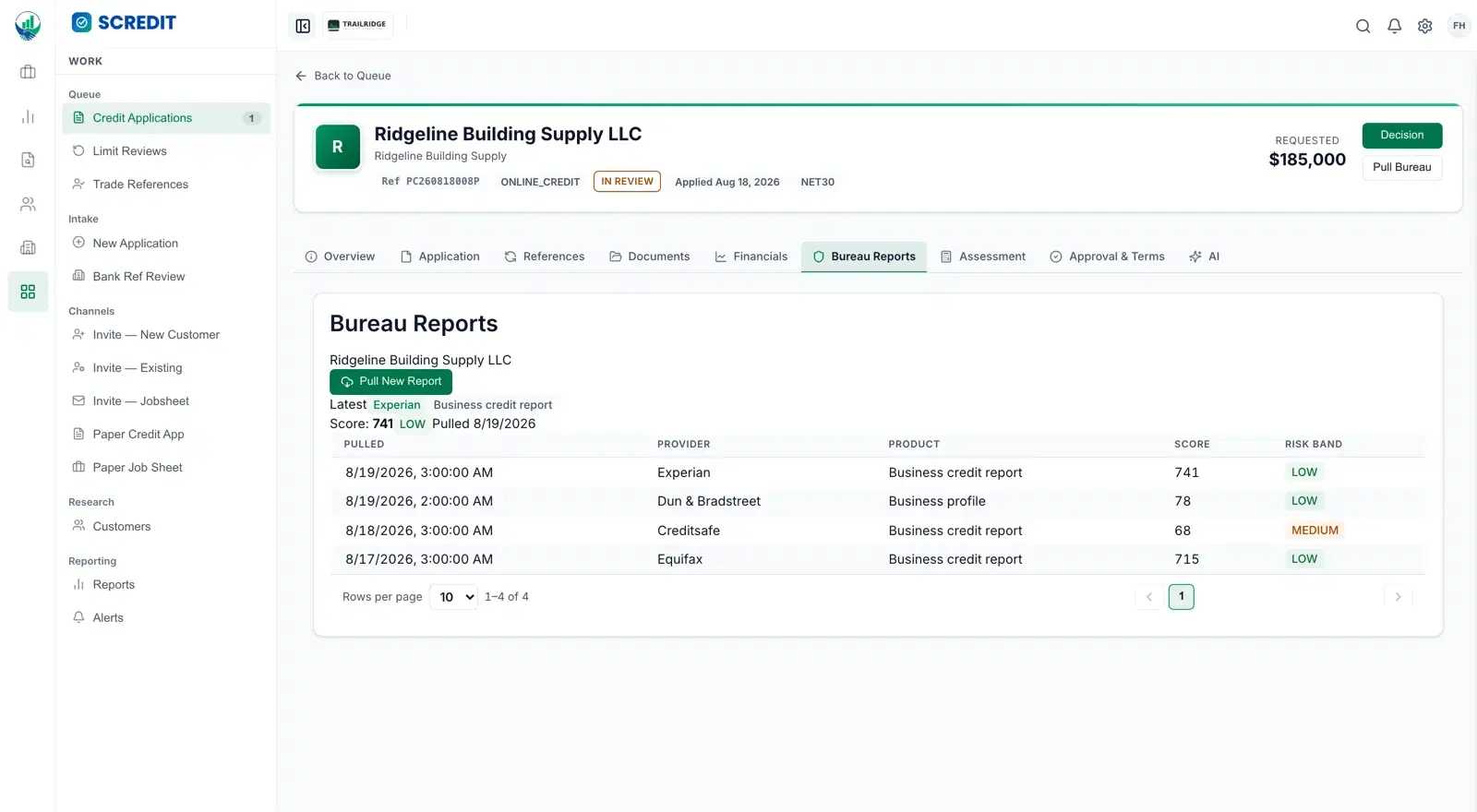
Normalized Report Views
Bureau reports are presented in a consistent, readable view inside SCREDIT, so analysts evaluate the content without relearning each vendor's format.
Scores as Scorecard Inputs
Bureau scores and signals feed the weighted scorecard as configured components, alongside financials and your own payment experience.
Report History on the Account
Pulled reports are retained against the account, building a timeline of external risk signals over the life of the relationship.
Bureau pulls, in the product
What changes on the desk
Bureau Data Actually Gets Used
Make pulling external data a step in the workflow, not an errand outside it.
Faster Application Review
Eliminate the portal-login-and-download detour from every credit file.
Current Data at Review Time
Base periodic reviews on refreshed reports rather than the original onboarding pull.
One Evidence Trail
Keep bureau reports with the decisions they informed, permanently.
Frequently asked questions
Which bureaus does SCREDIT integrate with?
SCREDIT integrates with commercial credit bureau vendors through their APIs, with CreditSafe-style vendor integrations as the reference pattern, and its normalized report views are designed to present data consistently across providers. Which specific bureaus make sense depends on your markets and coverage needs, which we work through during implementation.
Do we need our own bureau account?
Yes. Bureau data is licensed from the bureau, so you contract with the vendor for data access and SCREDIT connects using your credentials. Your existing bureau relationship and pricing carry over; what changes is that reports flow into your workflow instead of a downloads folder.
How does bureau data affect the credit decision?
Two ways. Analysts see the full normalized report during review, so qualitative signals like legal filings and trade payment experiences inform judgment. And bureau scores feed the weighted scorecard as configured components, so external data influences the risk band through the same transparent math as every other input.
Can we monitor existing accounts, not just screen new ones?
Yes. Bureau pulls are part of periodic review and monitoring workflows, not just onboarding, so an existing account's external picture gets refreshed on your review cadence rather than frozen at the moment the account opened.
Is bureau data enough on its own to decide credit?
No, and we would not claim otherwise. Bureau data reflects how a company pays others; your receivables reflect how they pay you; financial statements show whether they can keep paying anyone. The strongest decisions weight all three, which is exactly what the scorecard is for.
See bureau data inside the SCREDIT workflow.
Watch a bureau report get pulled, read, and scored inside a live credit review.